Enter Password
40% Course Development Efficiency Gain
supporting $9M annual impact
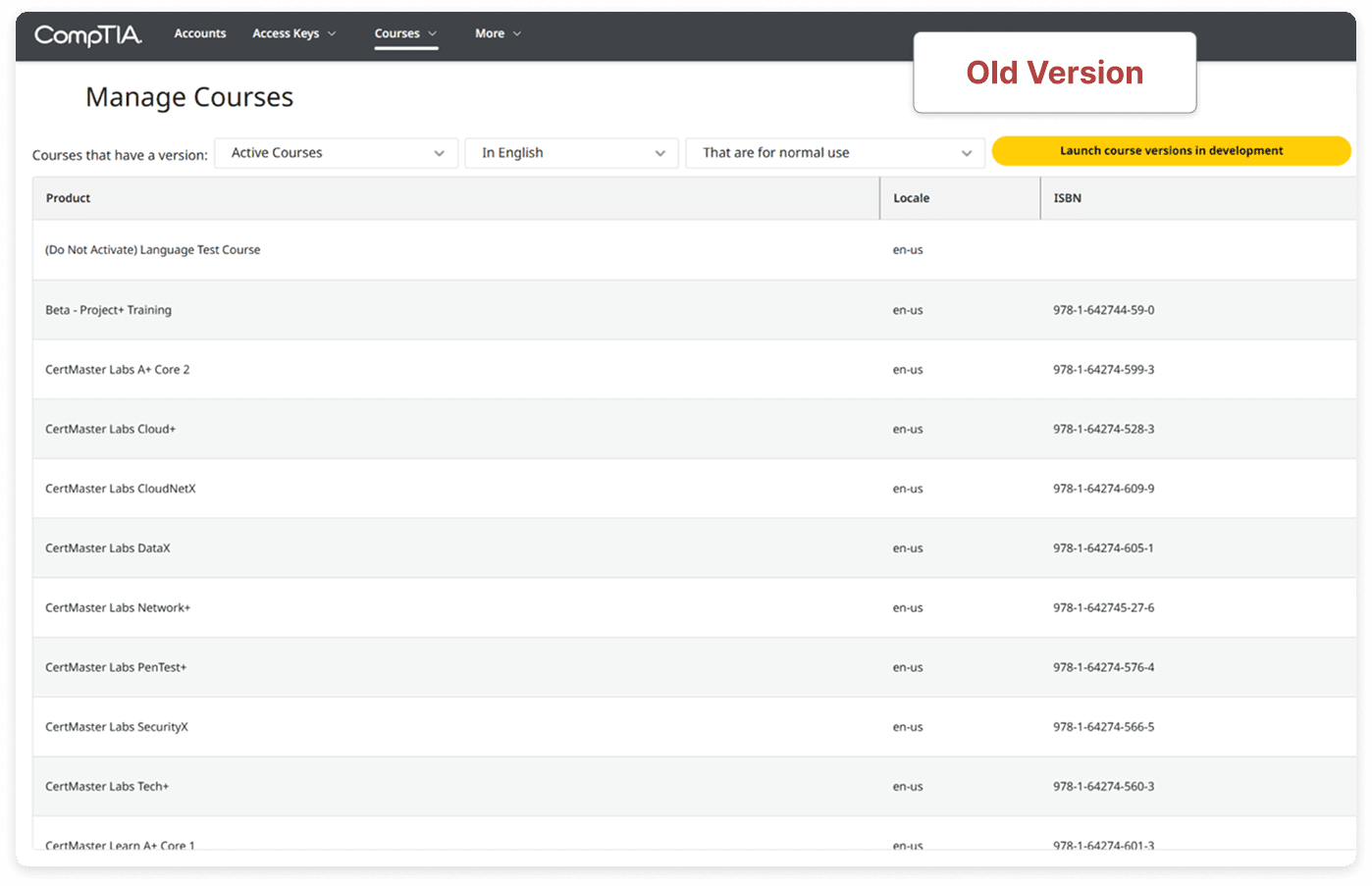
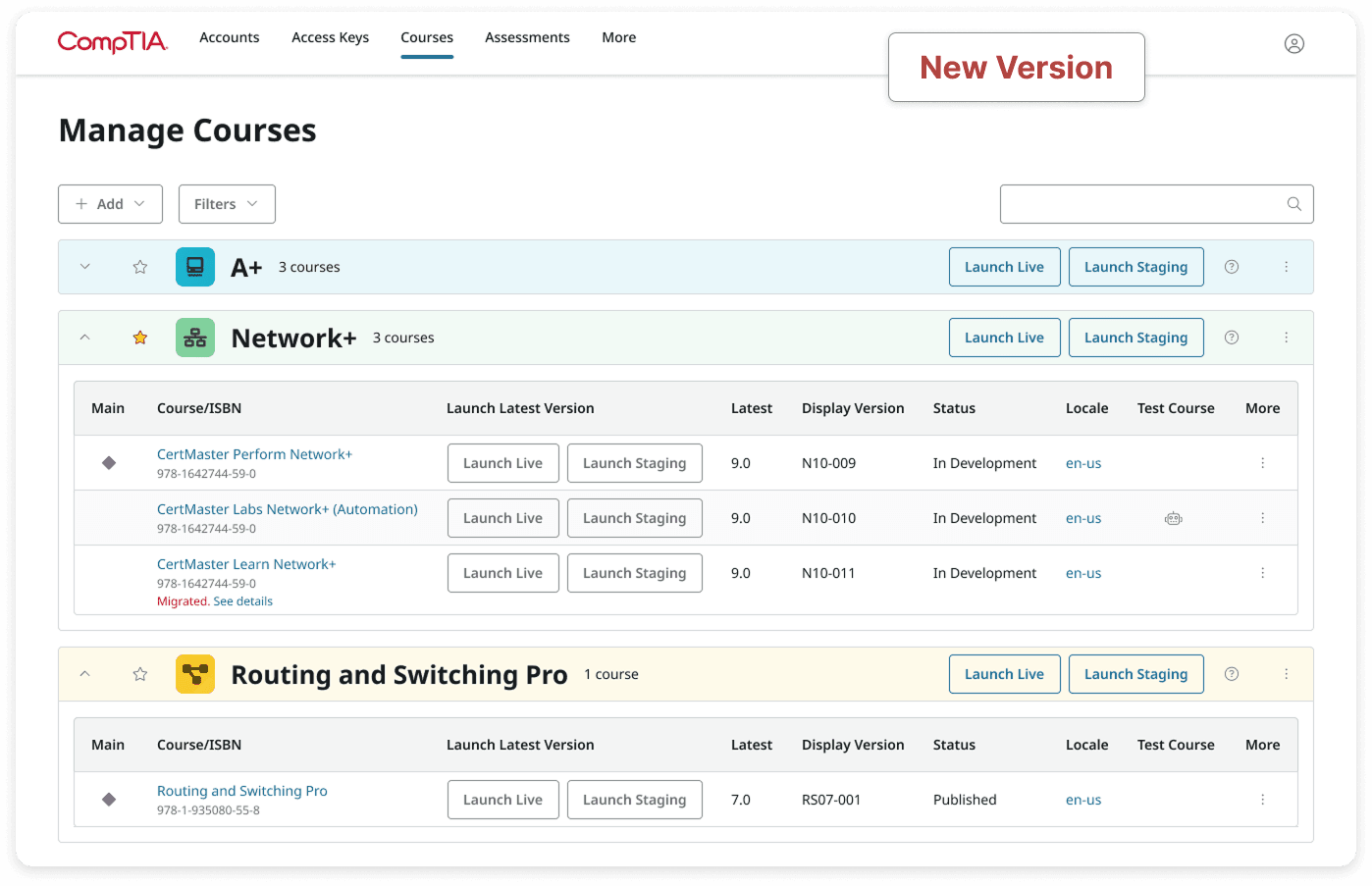
Before and after version of the Manage Courses tool.
With CompTIA’s acquisition of TestOut and their LabSim learning platform, the company gained a proprietary location for hosting courses — representing an annual savings of $6M. They also set a goal to increase revenue through accelerated course production. The key to both business objectives was updating LabSim’s internal-facing Manage Courses tool.
Through user research and collaboration with Engineering and Course Development, I redesigned the Manage Courses information architecture to unify CompTIA’s and TestOut’s disparate course organization structures in a way that provided flexibility for future growth. I also improved the course development workflow efficiency by an estimated 40%. Together, these efforts supported roughly $9M in annual impact by eliminating third-party hosting costs and enabling a 2X increase in year-over-year course production.
CompTIA was spending $6M a year to host courses on third-party platforms.
Accelerating course production was a key business goal to generate additional revenue.
After CompTIA purchased TestOut, the product team needed to revamp TestOut’s LabSim learning platform into CompTIA’s CertMaster platform, allowing CompTIA to host all of their courses in-house, freeing them from reliance on third-party hosting platforms. This required unifying two divergent course organization structures by updating and redesigning our internal course management system.
After CompTIA acquired TestOut, the product team focused on transitioning TestOut's LabSim learning platform into CompTIA's CertMaster platform to meet core business goals.
I worked with Product Management to identify the teams that used the Manage Courses tool. I conducted interviews with each group: Engineering, Course Development, Customer Success and Sales. I asked about pros and cons, and learned about their goals in using this tool. I learned that the Course Development team used the Manage Courses tool far more than any other group.
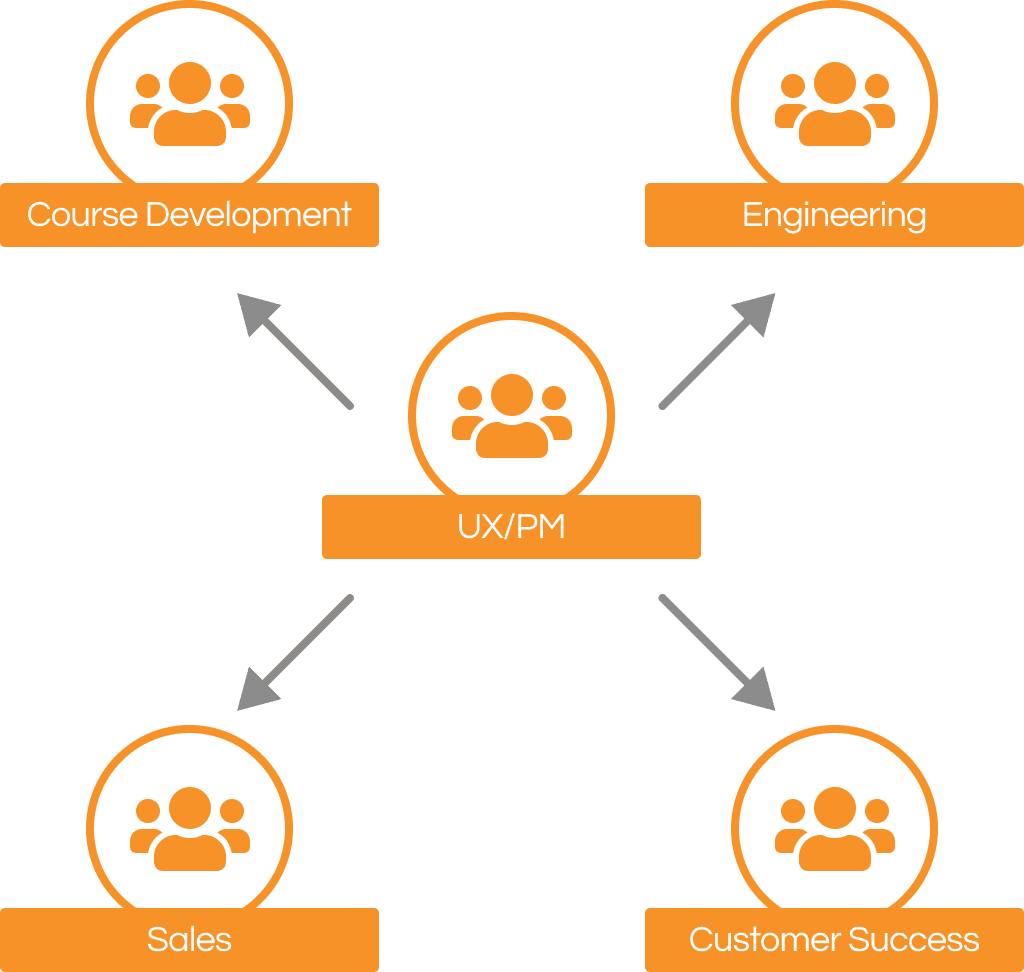
I interviewed the various teams who used the Manage Courses tool to understand the pros and cons of the existing tool, along with each team's goals in using it.
With additional focus on the Course Development team, I conducted contextual analysis, observing workflows and asking questions. It became apparent that by redesigning key workflows, we could significantly improve efficiency, supporting CompTIA’s goal of accelerated course production.
Unifying TestOut's and CompTIA's disparate course organization structures required a significant change to the underlying information architecture. I charted the proposed changes, and collaborated with Engineering and Course Development, iterating until we had a solid solution.
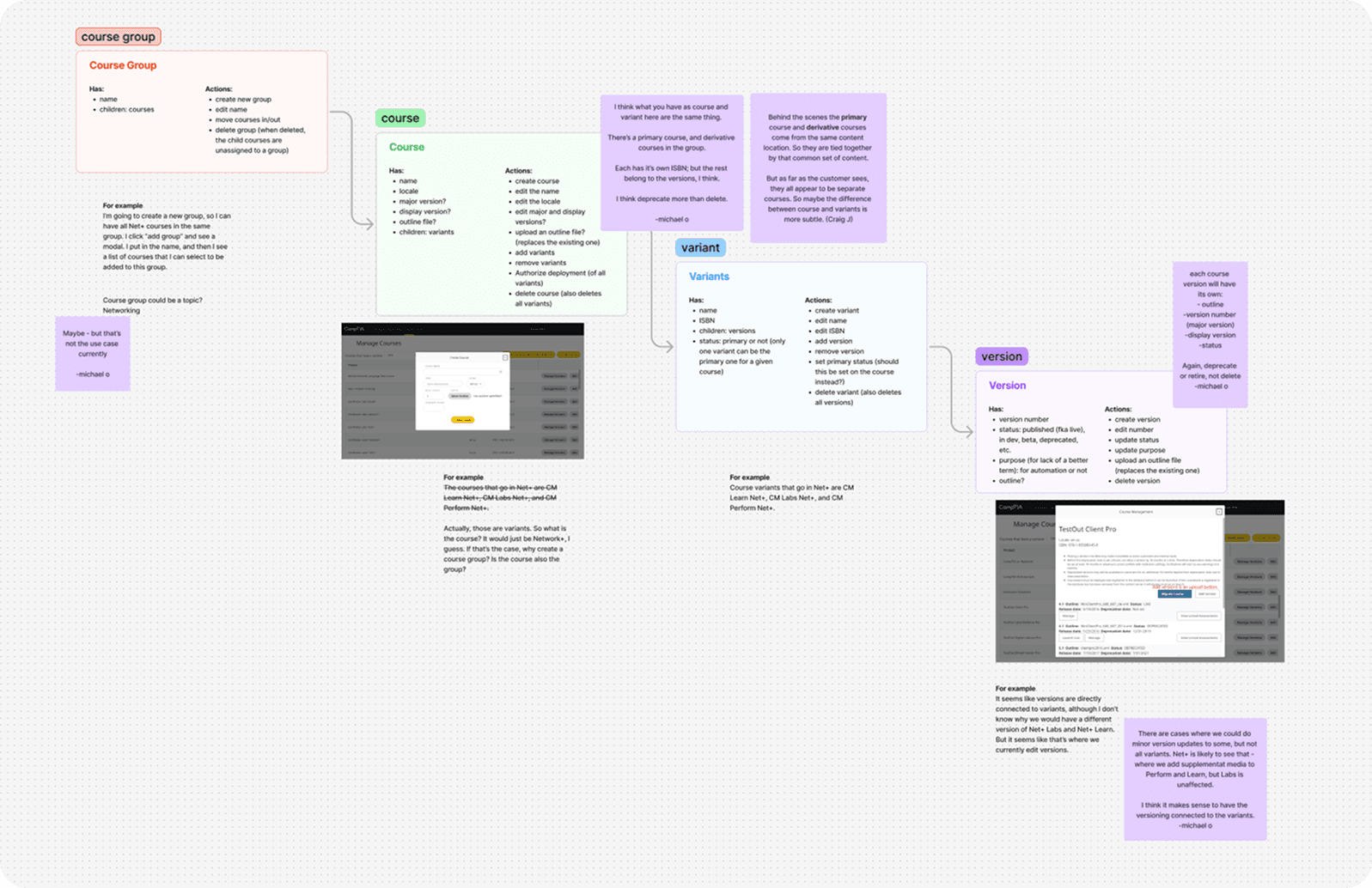
This was my first attempt at describing the information architecture needed to support the requirements of the new course organization structure.
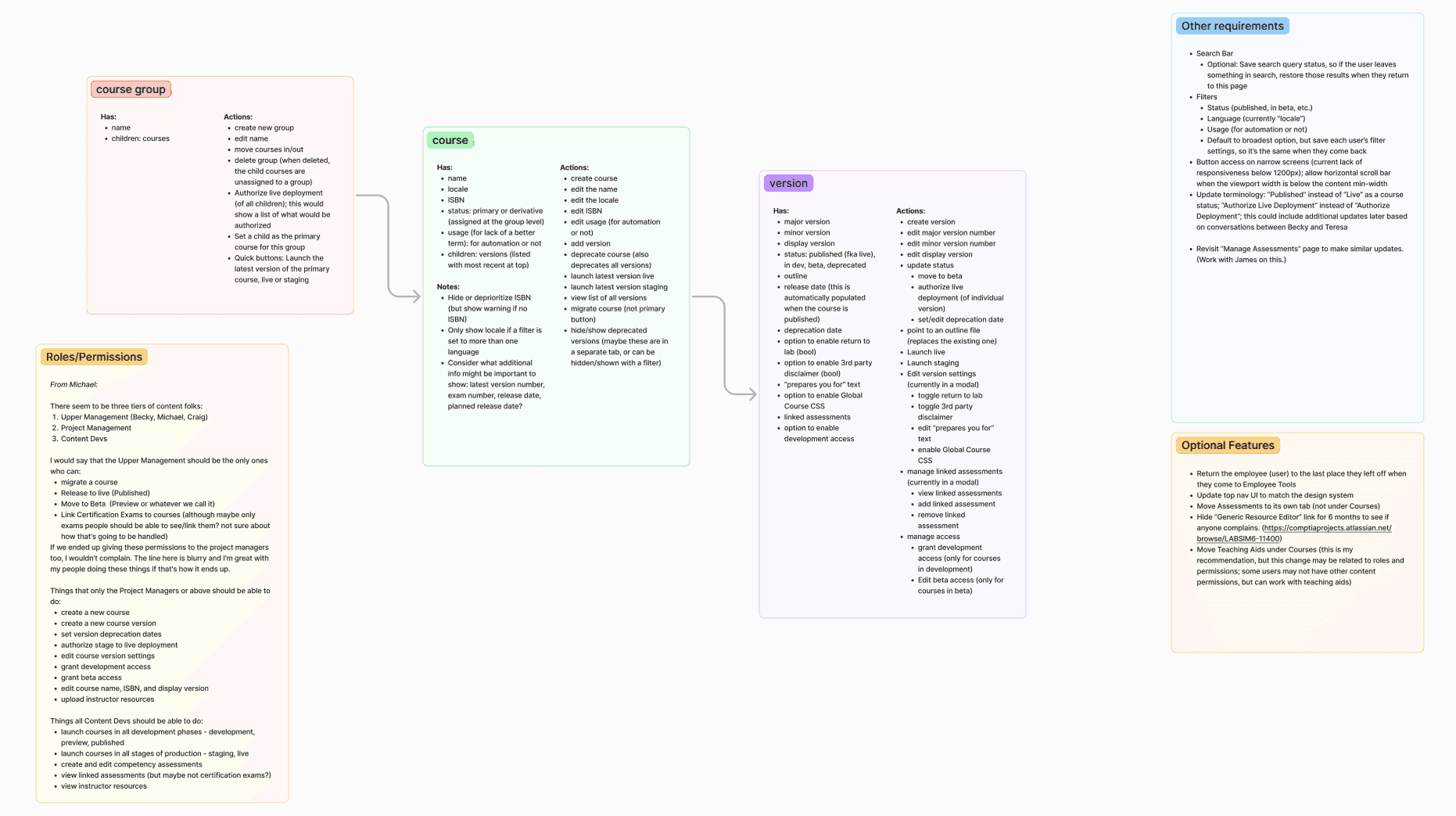
After iterating with Engineering and Course Development, this was the final diagram of the information architecture.
Thanks to this effort to understand the underlying data structures, by the time I started on mockups, I had a solid foundation in place. After my first presentation to stakeholders, I noted, “[I’m] glad I did the groundwork for this project, because at this point it feels pretty stable design-wise, not missing a bunch of stuff.”
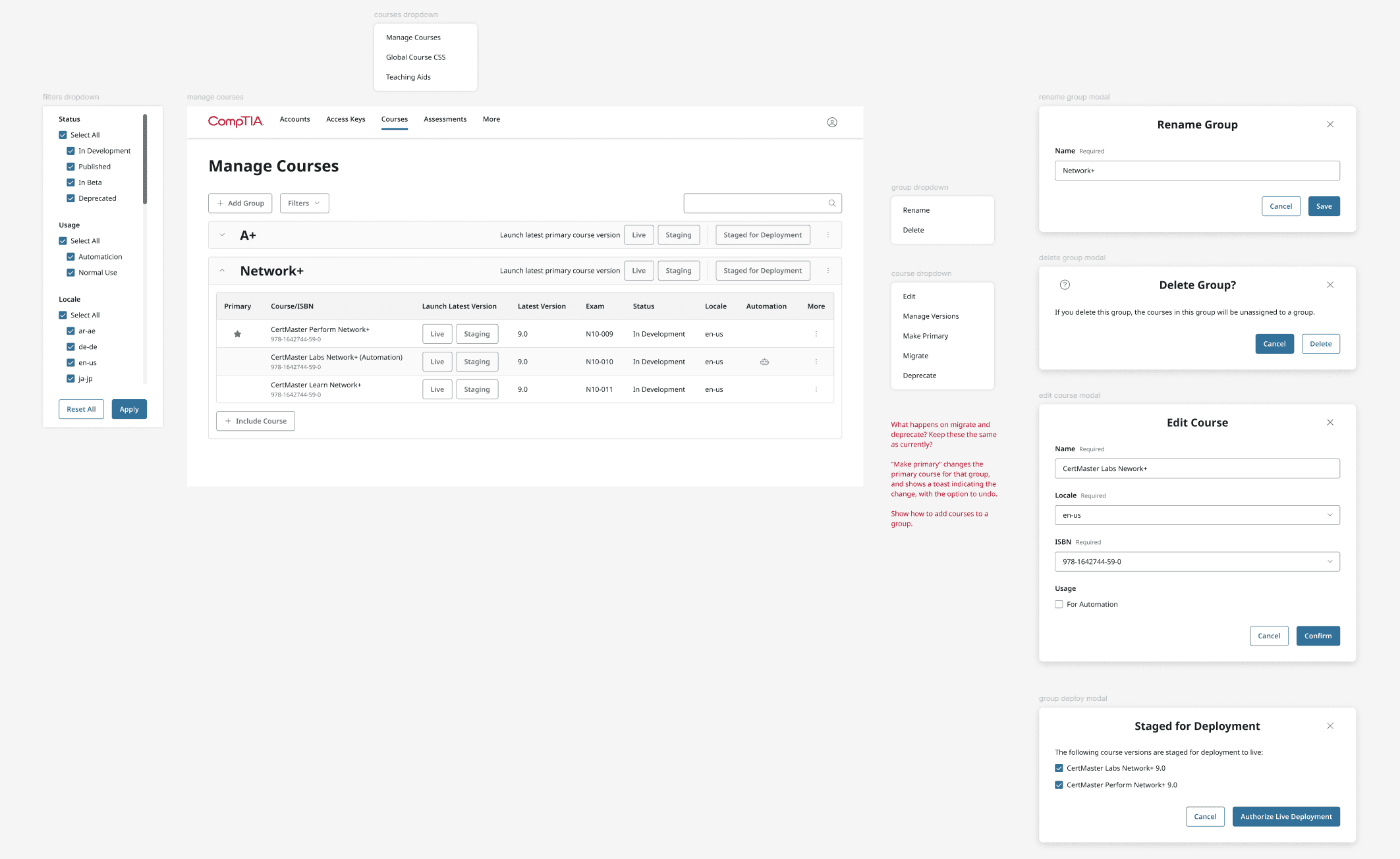
This was my first round of mockups. The UI/UX work benefited greatly from the foundation of research and information architecture.
Over an iterative design process, with frequent communication and meetings to get feedback from stakeholders, I made the following improvements that supported CompTIA's goals of hosting all of their courses internally, and accelerating course development.
Course Organization Structure
To free CompTIA from its reliance on third-party hosting platforms, I needed to unify two previously divergent course organization structures.
TestOut’s structure was a simple alphabetized list. CompTIA’s more complex approach involved groupings of related courses. CompTIA’s naming convention, when inserted into TestOut’s alphabetical listing, resulted in related courses not showing near each other.
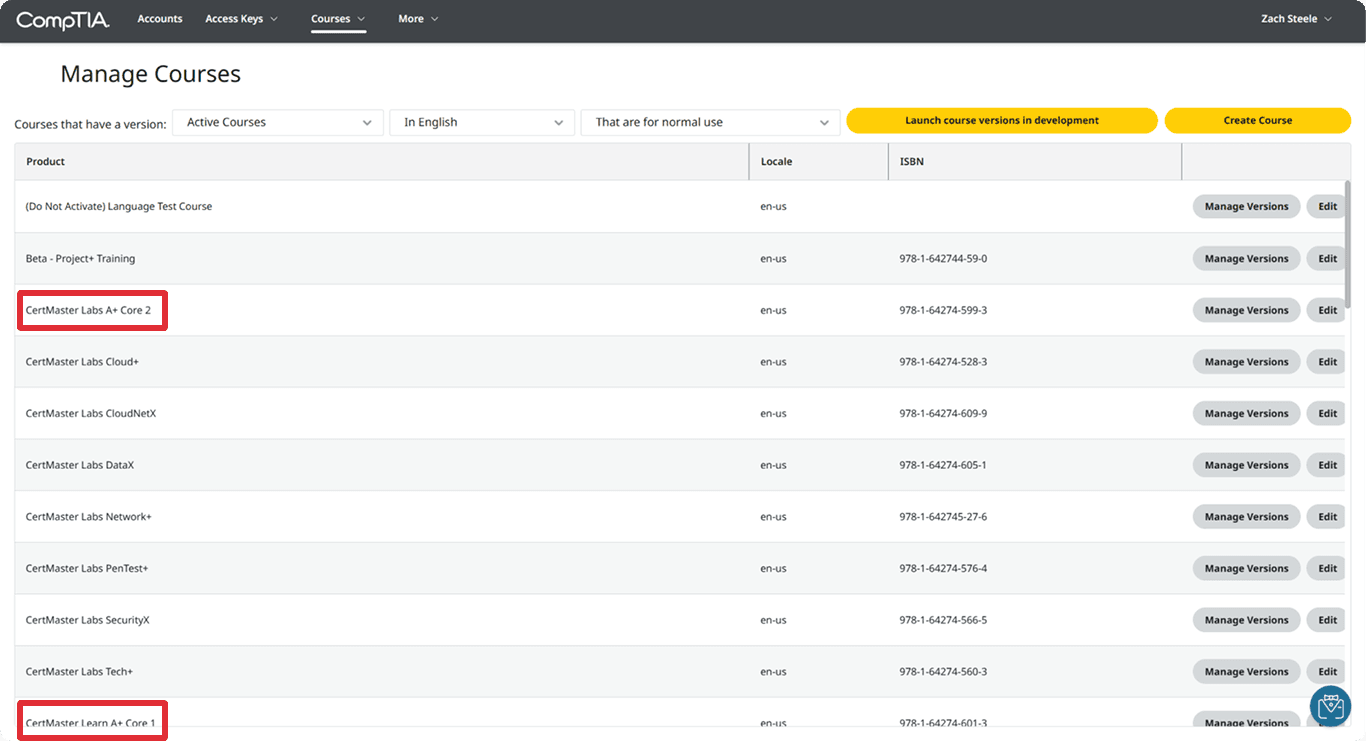
Before: Related courses from CompTIA didn't show close to each other in TestOut's structure.
To address this, I grouped course families into accordions, making it easy to scan the list alphabetically and find all related courses in one place. After a few rounds of feedback and iteration, the final solution placed all courses into groups: standalone courses were in groups of one. This allowed users to quickly scan the list alphabetically, and kept the information architecture consistent, while allowing flexibility for course development.
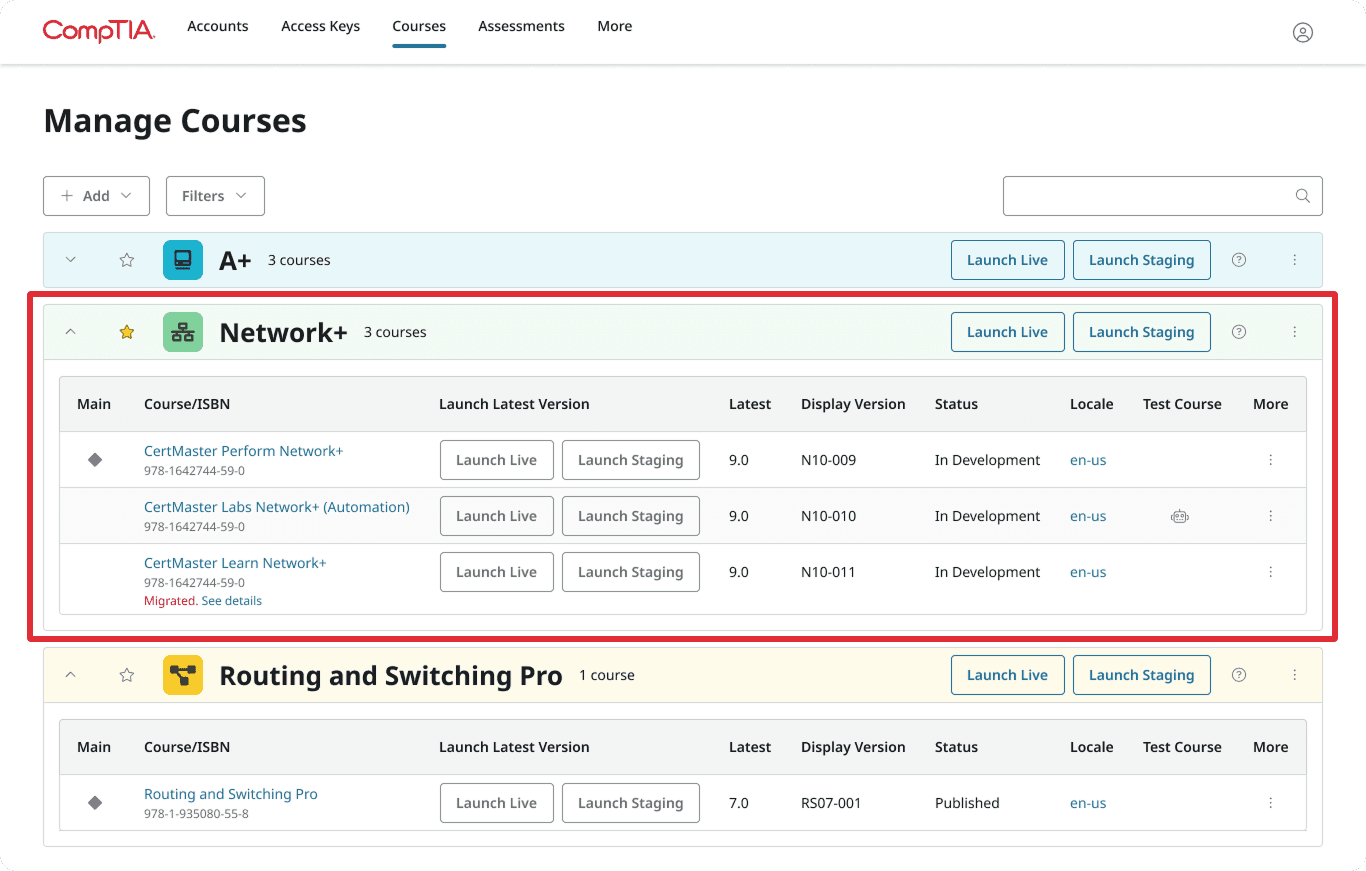
After: Courses grouped into accordions allowed for quick scanning and finding all related courses together.
Creating New Courses
Creating a new course included creating its first version in order to work on the course. Initially, this process was divided among three disconnected modals.
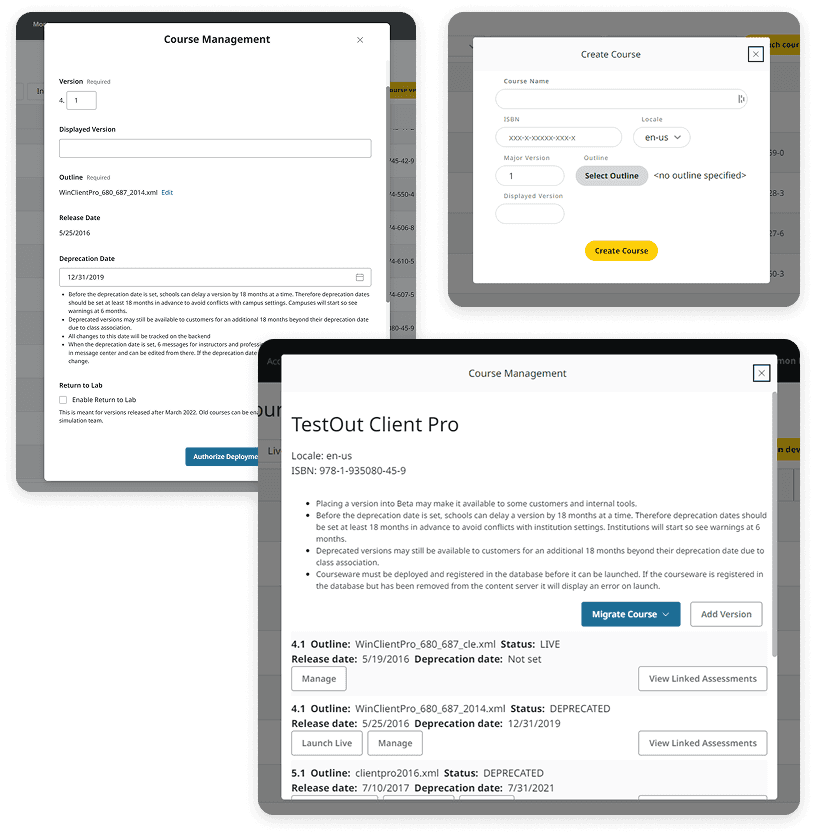
Before: Creating a new course and its first version took place in 3 separate places.
I combined the separate flows into a two-step wizard, making the course + version creation process a one-stop shop.
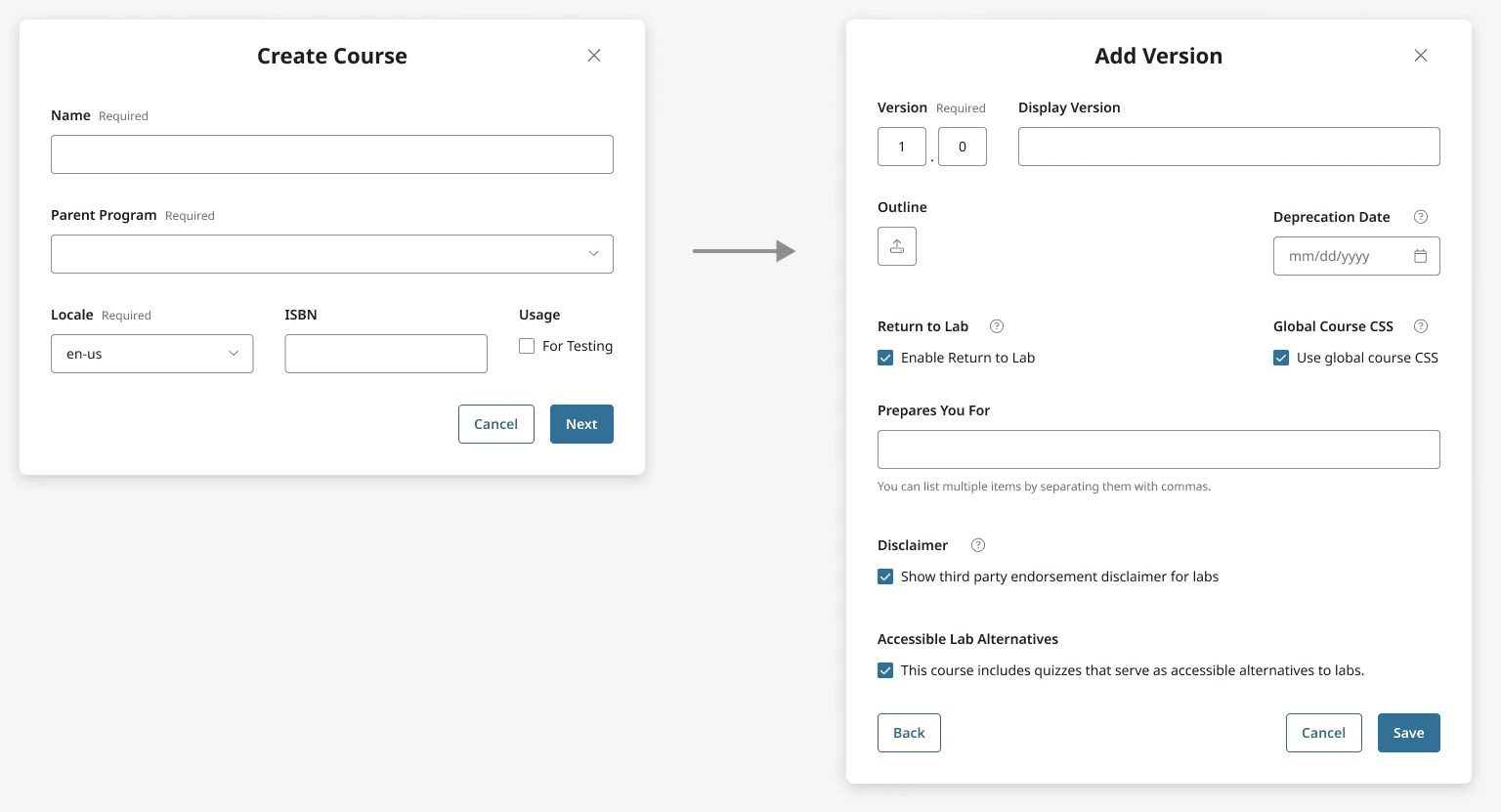
After: I simplified the UI and UX, combining these interdependent processes into one two-step workflow.
Launching Versions
By far, the most common action taken by course developers was launching a course. They did this many times a day. It required finding the right course, opening the “manage course” modal, finding the right version, and finally launching it. If you were working on a course with several versions, this included the added time of scrolling to get to the bottom of the list to launch the latest version (the typical scenario).
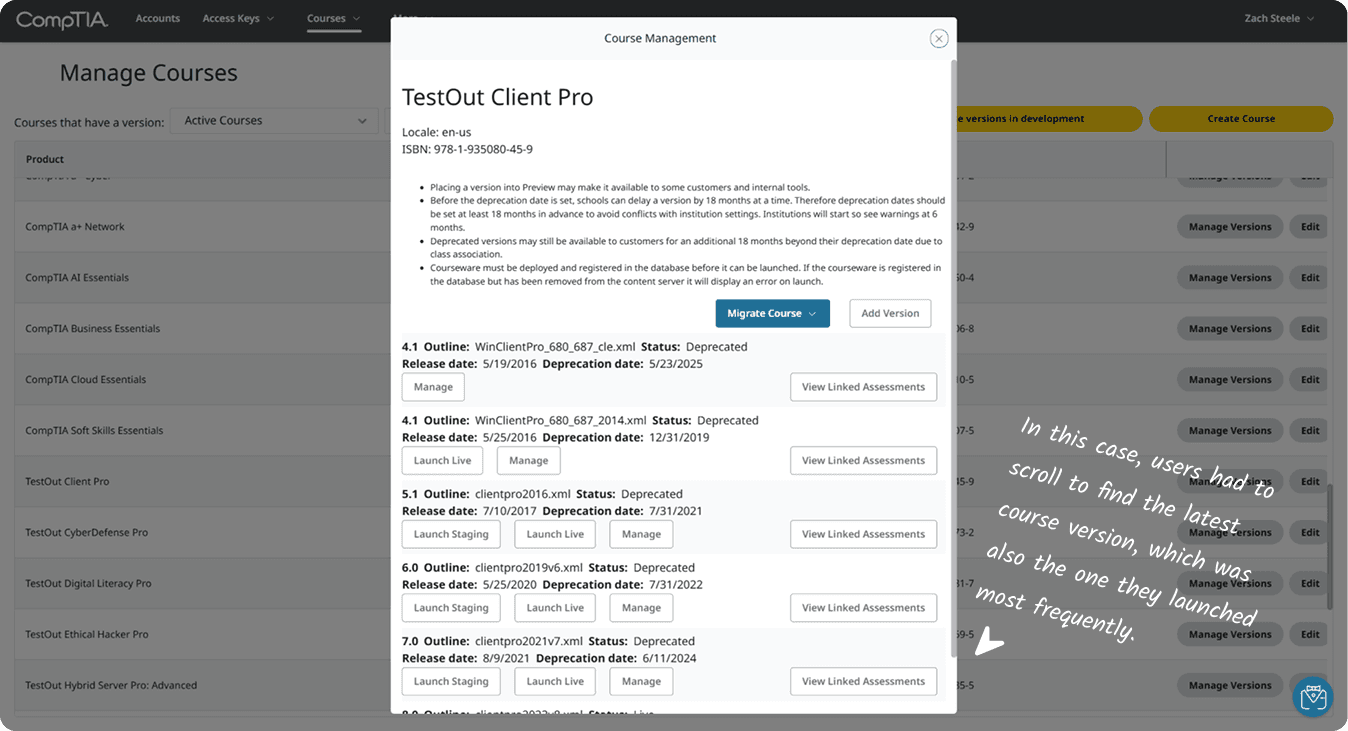
Before: Launching a version required multiple steps, especially if you had to scroll to find the latest version, which was the one most commonly launched.
I elevated the launch action to make it available from the Manage Courses home screen. All course groups had one variant on which the others were based. This was almost always the one developers wanted to test. I added buttons to each accordion to launch the latest version of the primary variant of each course. This significantly reduced the time spent on this most common action.
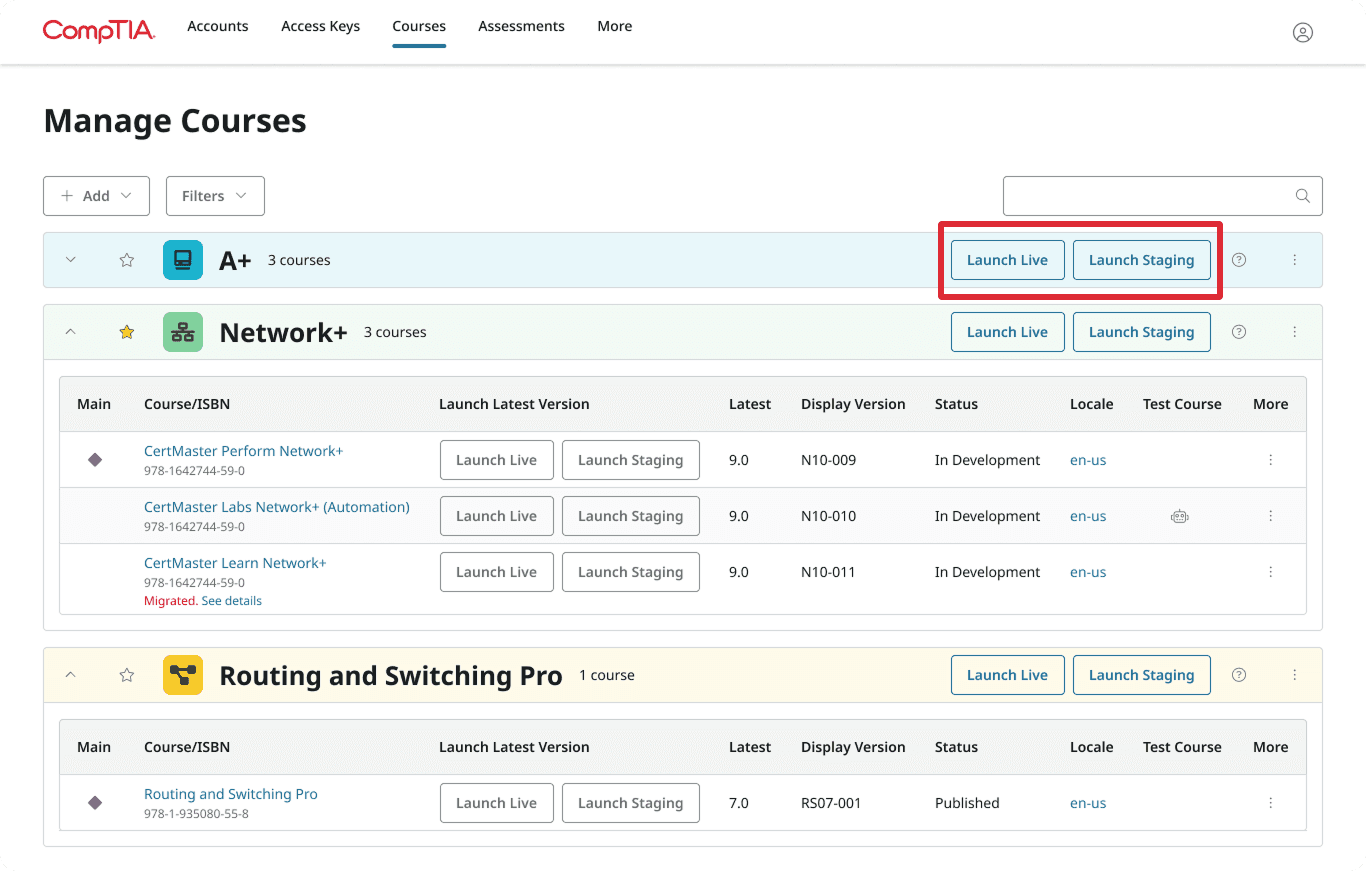
After: I elevated the "launch" action to be immediately available from the Manage Courses home screen.
Filters
The previous set of filters was built by engineers for engineers, and didn’t serve the needs of the Course Development team, the group that most commonly used the tool. Furthermore, the layout was inflexible, limiting expansion by taking up a lot of horizontal space.
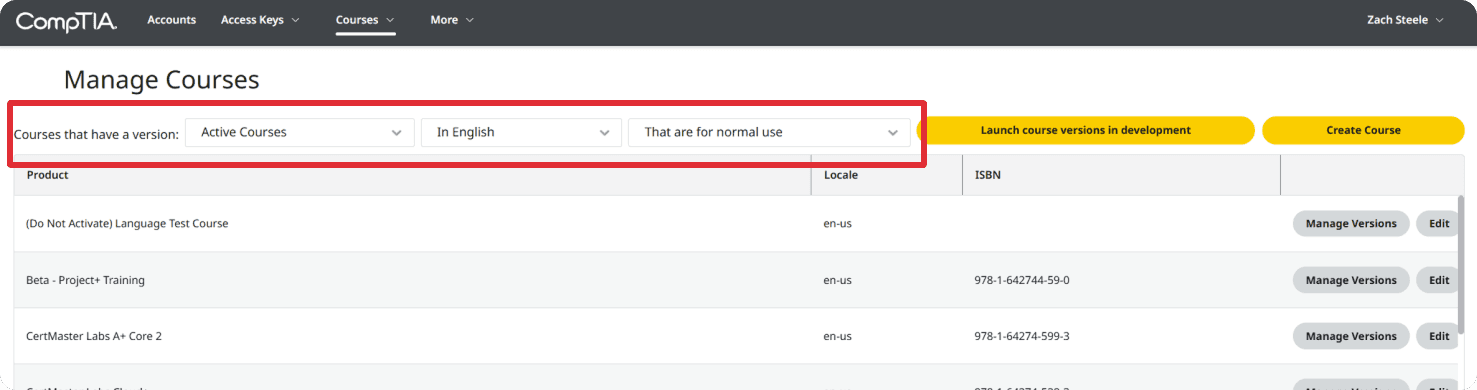
Before: The previous set of filters didn't meet the needs of the Course Development team, who most commonly used the tool.
To address this, I utilized the filters component we had already implemented in the customer-facing UI. This provided flexibility for adding future filters. We also updated functionality to make filters persistent. With this update, filter settings didn’t change until the user changed them.
That update, combined with the ability filter by “starred” courses, allowed course developers to personalize their workspace, further enhancing productivity.
After: The new filters component provided flexibility for growth, and better served the Course Development team.
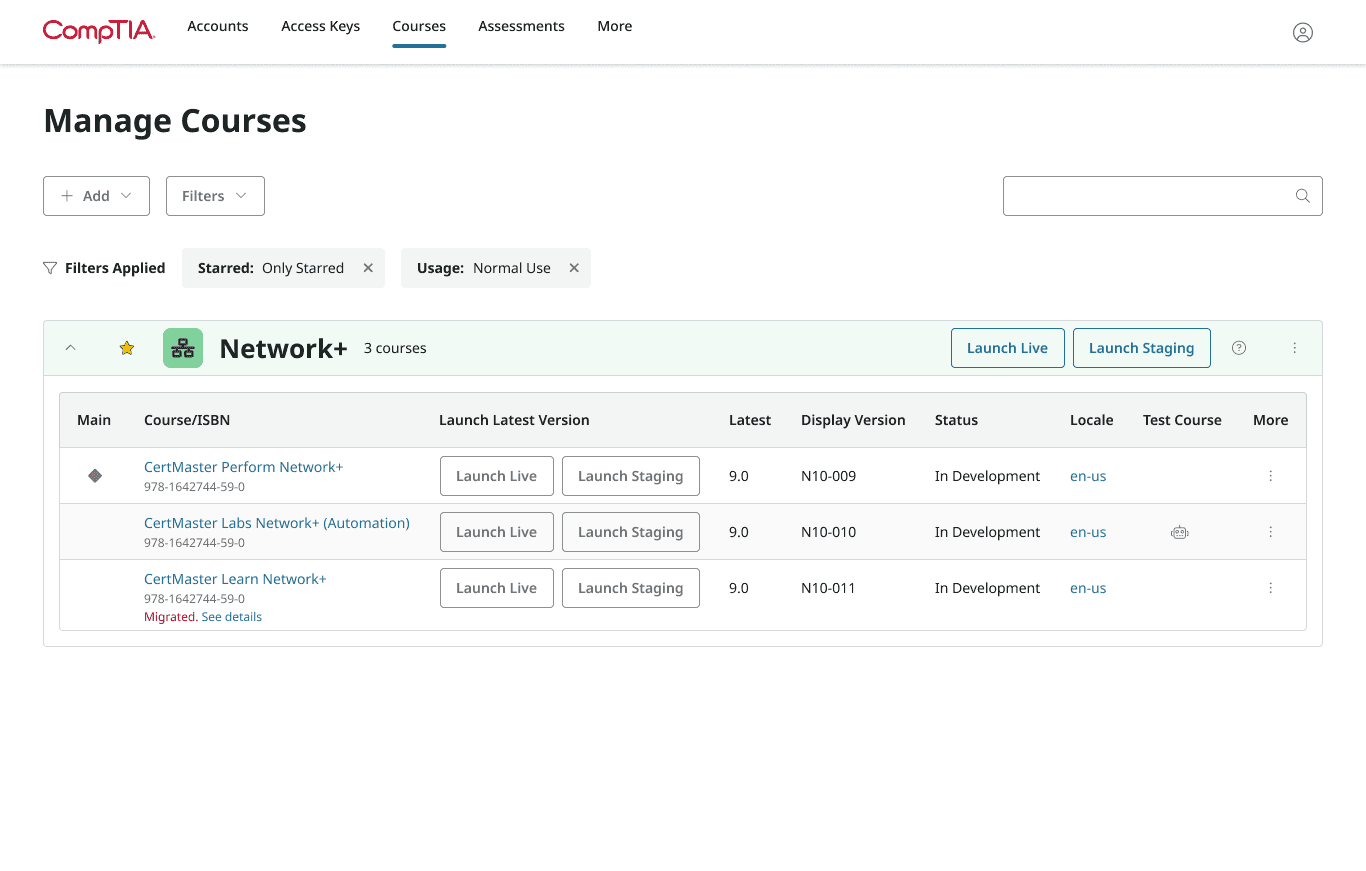
With project favoriting and persistent filters, course developers could customize their workspace to the projects they were actively building, reducing navigation time and improving efficiency.
The goals of this project were
To combine two disparate course organization structures into one, allowing CompTIA to host courses on their own platform, saving them $6M/year.
To support ramped up course production, increasing revenue.
The new organization structure we came up with allowed flexibility for standalone and grouped courses, providing for growth while freeing us from the cost of third-party platforms.
I asked course development managers to estimate the efficiency gains represented by the new designs. They estimated 30-50% efficiency improvements. The increased efficiency supported CompTIA’s goal of accelerating course production. In 2025, CompTIA released 6 new courses, twice their output from 2024.
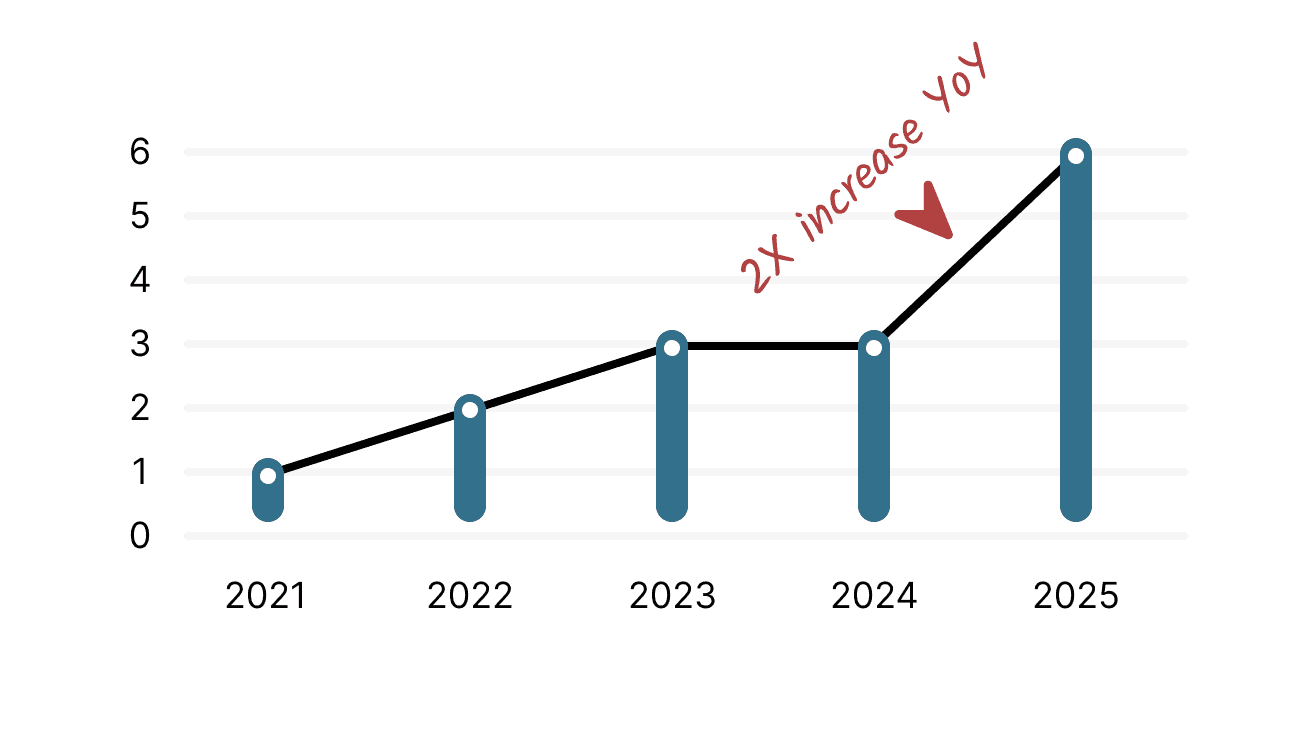
CompTIA's 2025 course production doubled its 2024 output.
I estimate that the additional courses will lead to at least $3M in revenue over the next year, making the total annual impact of this project approximately $9M in the first year alone.
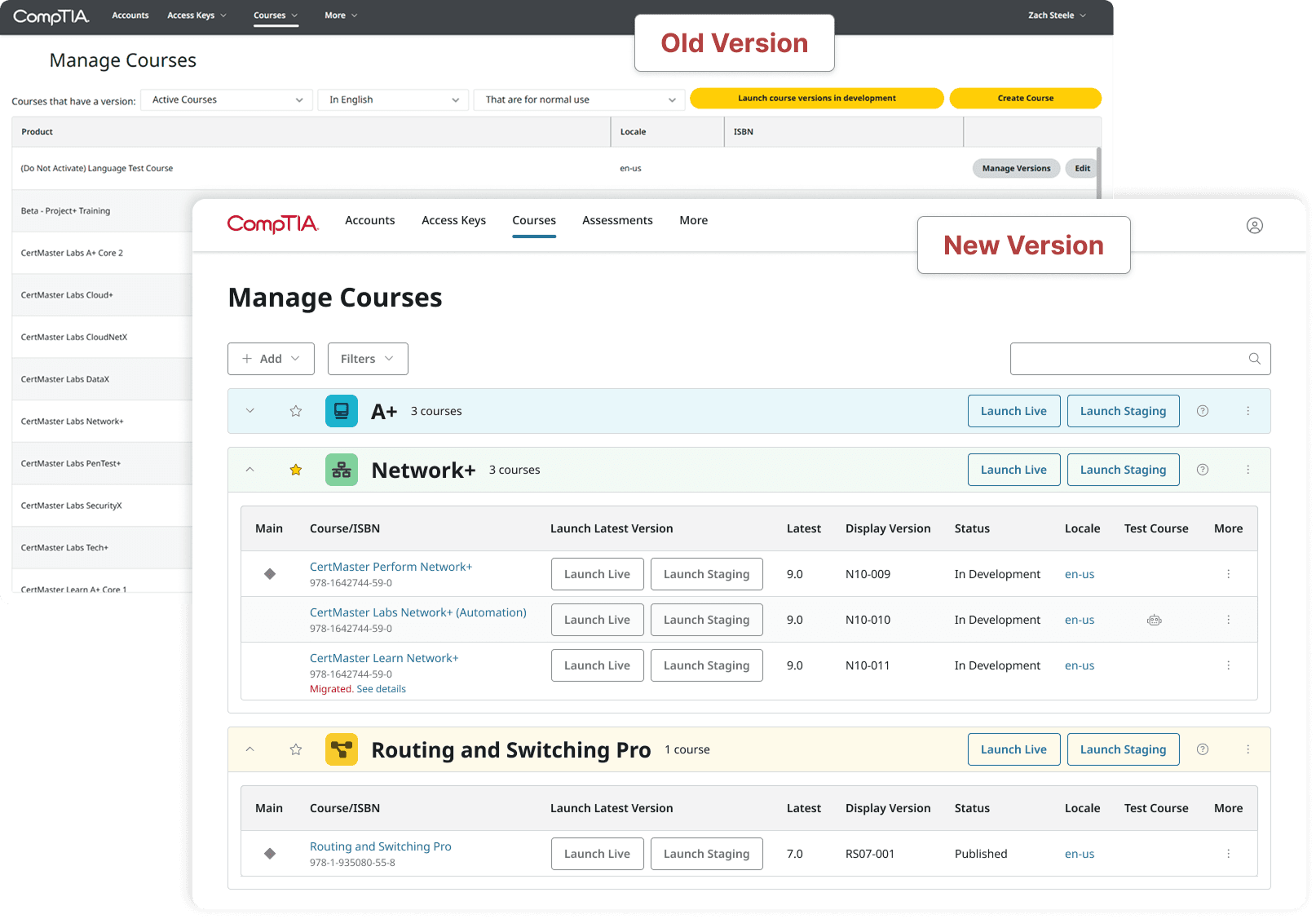
The new version of the Manage Courses tool supported 2X course release year-over-year, and saved CompTIA $6M annually.